In 2026, K-pop is Revisiting The Album

It’s officially halfway through 2026, and I’m starting to think that this is K-pop’s Year of the Albums.
Every year, there are good releases. Usually, we as humanity focus on the singles. The songs that are the primary focus of an artist’s promotional cycle. The ones that get the music videos and promotional performances. As streaming leads to shorter songs, and the attention span of everyone goes to pretty much zero, it has felt for the past few years that only a handful pop artists have made truly cohesive albums rather than sound bites thrown together in a compendium just to fill up space and make something an “album” release rather than a one-off single; there are far more charting and promo opportunities for album sales rather than singles.
But there's something going on at the moment: thanks to streaming making so much more music available, I always listen to albums rather than just singles. Oftentimes, albums in recent years haven't really felt like a anything but a platform for release, and more chart record-seeking. Most albums from K-pop since maybe around 2020 haven't truly felt holistic, going from A-B and feeling like every song matters. End-of-Year albums writeups often feel like a concession to the idea of what an album could be rather than what albums are.
 Daniel Parris
But in 2026, I don't know if it's a mindset shift or an artistic one, maybe a response to the off-kilter 2025, but it feels like something has changed: it feels like people are not only listening to but talking about albums as unified projects.
The most obvious item to look at is BTS's Arirang album. The long-awaited return from BTS, it's a divisive album, literally: not only has it split opinion about whether it's a supreme work of art or a subpar consumerist production, it's literally divided in two halves, transitioned by the haunting ringing of a mythologically haunted bell. After a documentary showed that the album's creation was created an a less-than-optimal timespan, people blamed the usage of English, or the needs of Hybe as a publicly-traded company, as superseding the artistry, while others sang the praises of an artwork built in the confines of that very thing. Spurring a lot of conversation, it ended up with a pretty positive combined rating of 74 points out of 100 across professional critics who share ratings (Anthony Fantano of the Needle Drop was the lowest at 30, while Rolling Stone UK was the highest at giving it an 100).
If you're reading this as a diehard fan of one group or artist, I'd love to hear in the comments how often you listen to full albums from other acts. From where I'm sitting, EPs and LPs of K-pop have generally been reduced to viral moments, fan service or, sometimes, artistic posturing.
I had chats with friends for weeks after the album's release, people asking my opinion. I have literally written a book on BTS's music, and have had many thoughts about Arirang since it was released. I have a draft sitting here with half-baked ideas I may share at some point, but I think that reflects the ultimate act of what makes a well-crafted album: it spurs not only repeatability but also discourse. Every time I listen, I think about something new, or notice some new element, because I'm obsessive about the craft of BTS. Even if BTS weren't as big as they were, those of us who care about the craft of pop would be looking at how this album ruminates on certain themes, incorporates certain producers, feels groundbreaking, and does things that make some feel like it could have been better or more holistic, but I think it's that dialogue that it enables that is so important.
But, you might argue, nobody who cares about BTS and music wasn't going to listen to Arirang in full once the group released the album. Who would only listen to the singles of one of the most-prominent album releases of the year, you might ask? And that's fair. We do tend to care about album releases from big names; Taylor Swift and Drake come immediately to mind. But in K-pop, it's definitely more singles first for most people, outside of fandoms. If you're reading this as a diehard fan of one group or artist, I'd love to hear in the comments how often you listen to full albums from other acts. From where I'm sitting, most EPs and LPs of K-pop in recent years have generally been reduced to viral moments, fan service or, sometimes, artistic posturing.
Which is why I've been so struck at how many other holistic albums there are this year. This is expected of BTS. But I kept texting friends this year about liking albums, to the point where I was like, "wait, did I already text [insert random friend name] about this album?" But no, I just kept saying, "Wow, I really enjoyed XYZ album". This isn't necessarily new; I love talking to people about music. But what is new is that it's not just to discuss individual songs. It feels like there's an intent this year from production teams that we should be listening to projects that from start-to-finish feel like units rather than stand-alone items on streaming platforms. If you can put an album on from start-to-finish and follow-through its musical identity, I feel like you have a rarity in K-pop in the 2020s. Maybe I'm projecting, but there were several albums this year so far that make me feel that way, and I feel like it's worth noting.
To get into it, I want to briefly look at the top three albums that personally resonated with me: NMIXX's Heavy Serenade EP, IVE's REVIVE+ LP, and The 8 & Vernon of Seventeen's V8 EP.
This isn't just me trying to convince you that these albums are very good and worth a listen; I don't actually care if you feel that way, and I'm not coming at this with a reviewer's lens, but rather a listener's ear. As someone who has covered K-pop releases for over a decade, I am telling you that I feel there is something happening right now in the way production is coming together in a way we haven't seen in the past few years.
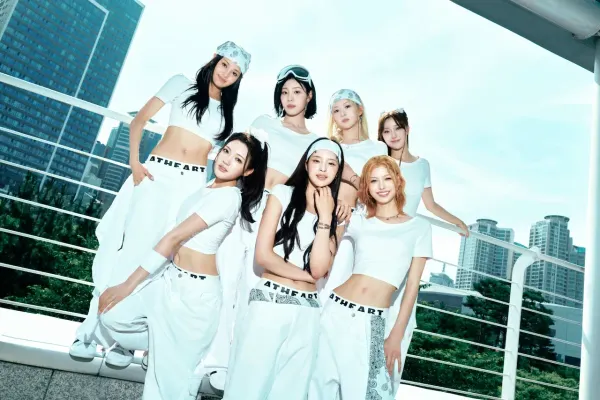
The first is a relatively brief EP, but powerfully captures NMIXX's prowess as a pop group across a variety of different genres, as the album continuously pushes the focus onto how the group interacts as musicians with music. The genre-flitting, a mainstay of K-pop, is intentional, as if asking the world to pause and take note of the fluidity of these singers across pristinely varied soundscapes that feed into one another in the way the best albums do. It's the blended diversity that makes it work: it's the sort of musical album that makes me think of the difference between an artist like Jackson Pollock versus Claude Monet. They both are incorporating a variety of different colors in atypical ways, but while expressionist Pollock features the splatters each standing on their own for the eye to see, impressionist Monet blends the colors into a seamless whole. NMIXX continually to turn parts into artistic cohesion, intentionally leaving a lingering impression of excellence.
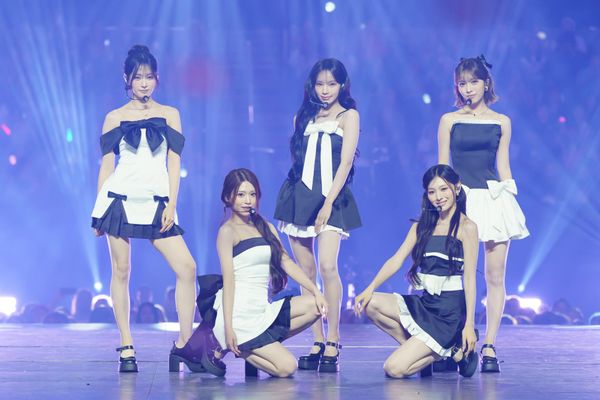
In contrast, I feel that IVE's album is more Pollock in the way that it's expressively laying out how excellent IVE can be when given the room to shine. A 12-track album, it fleshes out why IVE consistently get major hits in Korea since day one, and I truly believe it's because they stick to the core of what makes them great: picking a trending pop sound, and putting a sprinkling of bold, brash, princessy-pop pep into the mix. The production of Starship's girl groups in recent years between IVE and KiiKii have been pretty flawless, but I think what REVIVE+ does most importantly is showcase the members' solos just as well as they do the group B-sides. It brings together a sense of powerful pop elegance that IVE expressively epitomized since day one.
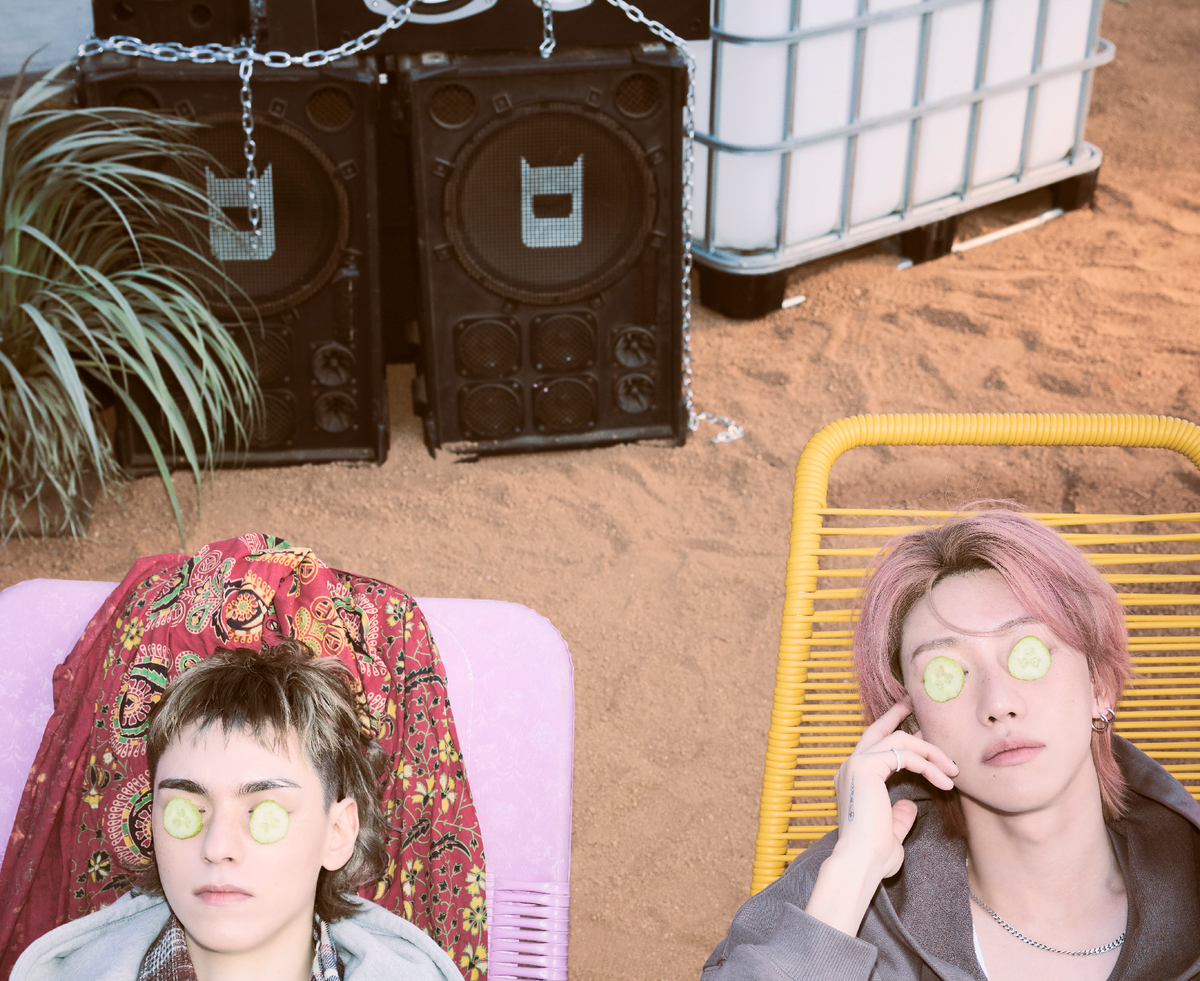
The last of the albums I mentioned earlier is V8 by Seventeen's Vernon and The 8. One of several units from the group, I honestly can say I did not really have any expectations for this album; I've heard solo music from both men and had no sense of how they'd come together. But they ended up impressing me immensely by coming together in a way that is firstly individualized and secondly awash in nostalgia: they sing in English, Korean, and Chinese, putting their foreign identities in K-pop front-and-center, while incorporating what I can only say is the music that sounds like it came out when they were in middle school. The album was promoted as hyper-pop but I feel like that's a little bit less-than entirely correct: it's not Charli XCX circa-Brat or classic SOPHIE as much as it is more of the electro dance-pop less-popular acts under Fueled by Ramen. While chatting about the lead track "singasong", one friend said it reminded them of Metro Station. As I listen to the album on repeat, I find myself wondering if either of them were, like me, big Cobra Starship fans at any point and decided to commemorate their 28th year by leaning into EDM nostalgia that feels birthed out of the same era that gave us Skrillex's circa Scary Monsters and Nice Sprites.
I think it's particularly of note that both IVE and NMIXX's albums weren't likely crafted necessarily for targeting western breakthrough as much as keeping popularity in South Korea, and V8's album is clearly for Vernon and The 8 more than it is any particularly subsect of regionality or fandom. I won't necessarily say I think that this is part of K-pop's reckoning with chasing the American Dream, but I do wonder if it's part of the reaction to how it's definitely changing things and we're seeing a some nostalgia towards something else.
Other albums that feel like the reflect how K-pop is leaning into the idea of albums again include, but is not limited to: aespa's Lemonade, Taeyong's WYLD, and SHINee's Atmos, which combined feel less like a resurgence for K-pop albums and more SM returning to its heyday as a solid album producer after a lackluster 2025; I also really, relaly enjoyed tripleS's <LOVE&POP>pt.1 and idntt's <yesweare>. There are several other albums I really liked that aren't coming to mind at the moment, which feels kind of nice because it means I have so many good listens this year that they're not all topping the mind. Ultimately, it feels like we're sitting halfway through the year with perhaps a minute shift away from a streaming-only focus from some production teams, and I think it's worth taking note of.
Have I convinced you yet that 2026 is the year of the album for K-pop? It's okay if not, because I'm still enjoying listening to each of these wholes rather their than parts, and wonder if you do to.
What I’m Reading
"'K-pop was never about the music' is the laziest argument against it" by Carmen Chin is an important read about how people choose to talk about K-pop: "K-pop comes to Western media already pre-categorised: a teenage phenomenon, a stan culture curiosity, a foreign product. The implicit question underneath most mainstream Western conversation about K-pop is not “what is this music doing and why do people resonate with it”, as it tends to be for genres like rock and punk. The argument that K-pop was never about the music is a disguise cultural condescension wears when it wants to pass for industrial insight."
"How much should we care about a pop star's baggage?" by NPR's Ann Powers feels very relevant for anyone who cares about women in music, or really anywhere in public spaces.
"What a pop star sees" via i-D, an interview conducted by Douglas Greenwood with concert photographer Alexandra Waespi who turned the camera from pop stars on stage to the fans in a photoseries dubbed "Front Row Feelings".
"The best music critics, according to music critics" from Embedded is a slightly annoying list for a variety of mostly-not-enough-women reasons, but it's nice to see music critics getting some attention in 2026 when it feels like nobody cares about anything except the latest short-form video hot take.
What I'm Listening to
I couldn't make it to IVE's show last night in the NYC area for personal reasons, and so have been listening to Revive+ in solace. Gaeul's solo "Odd" is my personal favorite one of the solo tracks, so enjoy.
A friend recently put me onto Tomatomat, whose TOMATOMAT DOSIRAK hits all the nostalgia I recently discussed, with different moments reminding me of peak early 2000s Korean indie music, Sunny Hill, T-Ara, and Orange Caramel repackaged for 2026 sensibilities with a detour into Perfume-esque technopop. Another album that proves that albums are alive and well in 2026 as an art form.