The nostalgic musical promise of the second gen of K-pop

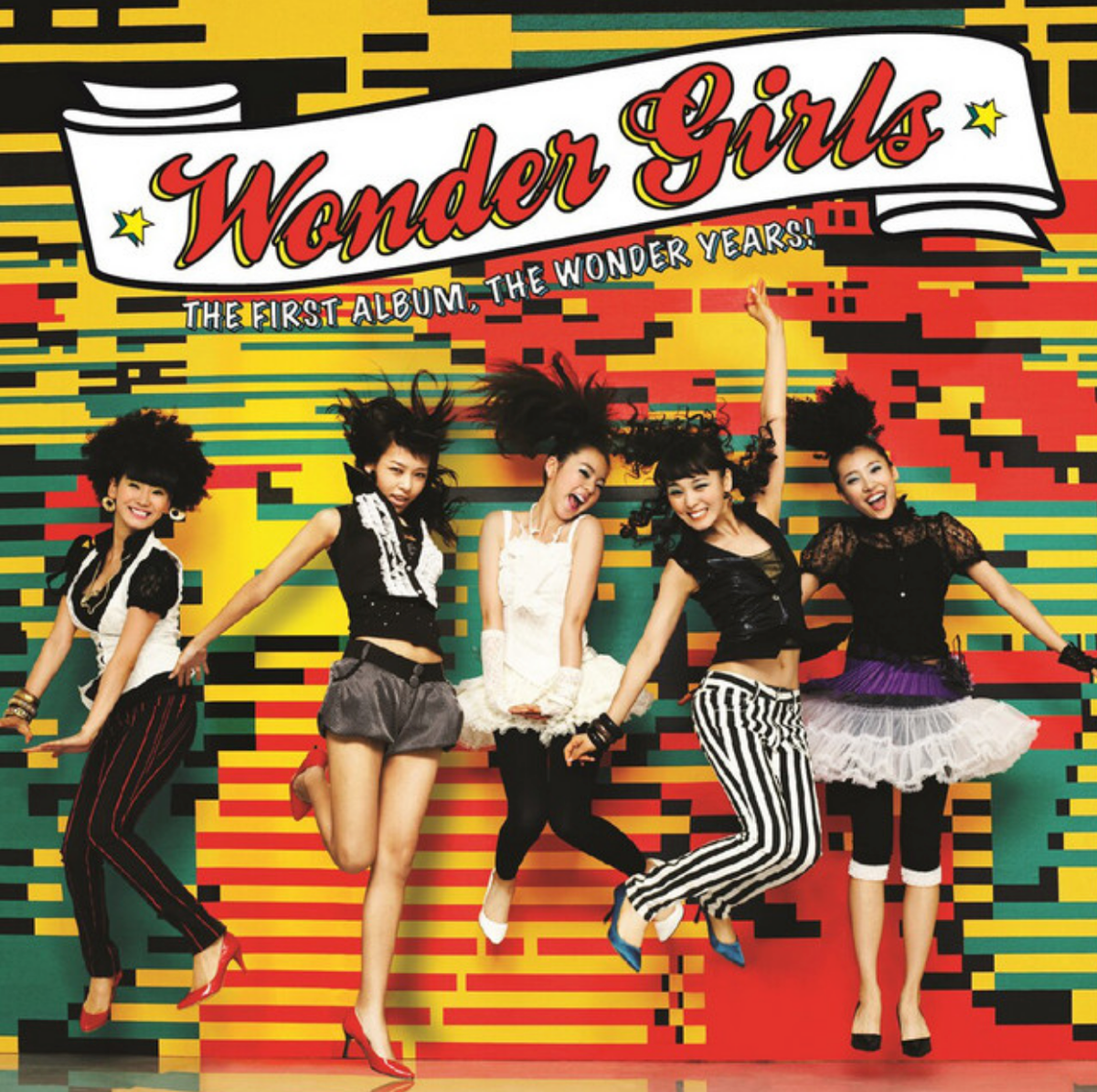
If you scroll long enough on Instagram, TikTok, or Youtube Shorts nowadays, you'll probably hear the twinkling opening synths of Wonder Girls' "Tell Me" from their 2007 album The Wonder Years. Why? Because everyone, and even their bunny, is performing it lately.
It is a sign of the nostalgic times, as people seem to be yearning for an earlier brand of K-pop, one that's full of electro-pop and disco, love and joy, and easy-to-follow dances perfect for TikTok masses.
Here's where we're currently at via my count, but I'm probably missing a few things: Rescene is remaking Kara's 2008 "Pretty Girl." The Dallas Cowboy Cheerleaders are performing Wonder Girls songs, and so are Wonder Girls members, as "Tell Me" trends, this after 2009's "Nobody" went viral thanks to an enthusiastic dancer at the Miss Grand Thailand competition. Boy groups are channeling the effervescence of 2000s dance-pop after girl groups started it last year.
Nostalgia-fueled reunions are also popping up. Most prominently there was the return of I.O.I this summer, who are not a second gen group but a transitionary act from third into fourth gen, so not necessarily super relevant for the sake of my argument (but still a great return!) But, for the sake of argument, Seeya (a transitionary, popular vocal trio between the first and second gen) and Secret have returned with new music.
I think Secret is particularly momentous for second gen returns as they had originally debuted in 2009, and are coming back for the first time in over a decade (though only two original members, with a third new one). This is Secret, the girl group whose songs like "Magic", "Shy Boy", and "Madonna" represented a moment in K-pop in the early 2010s when international growth was a burgeoning promise, and western media was starting to recognize the unique craft of K-pop. Nowadays, this is par for the course, to the point where we’re constantly seeing discourse about what K-pop even means in 2026.
In the second generation of K-pop, the identity of K-pop wasn’t just clear it was solidified and the music was cleanly recognizable as K-pop. And so at a time of flux, people are nostalgic for this specific era.
Nostalgia in music is par for the course, especially seasonally ahead of the summer. Older K-pop moments are consistently rediscovered by modern social media tactics; Lee Hyori’s 2003 “10 Minutes” took off in 2024. Younger K-pop acts are doing covers galore, like izna literally cosplaying as After School circa 2009 and performing "Diva". BIGBANG is back on tour, and also trending. The intro of "Tell Me" is everyone's favorite trending song, but not the only second gen girl group song getting its laurels. Everyone's nostalgic for Second Gen musicality, and some people are showing off their muscle memory. Chase Infinite seems to have grown up on K-pop beginning in the second gen, and is constantly being asked about it.
It feels like I'm a college student again, when K-pop felt perpetually bright and hopeful with the future and creativity ahead of it.
The second generation of K-pop is back, and I don’t think it’s just because it’s the natural time of a return based on the nostalgia cycle. But rather it feels like a subtle reaction to the way older fans of K-pop and music aficionados struggle sometimes nowadays to see what is distinctive in K-pop, as it increasingly aims to fit into the American music industry.
K-pop, as we saw last year, feels a bit lost. If you hang out long enough online, you're probably going to hear someone say that K-pop is boring. I don't think it's boring: I think that K-pop as a whole is grappling with something that the Wonder Girls had to when they attempted to make it in the U.S., and that's that trending towards one market means you have to change yourself so much that sometimes things go missing. All of K-pop is having a Wonder Girls (circa ~2009) moment, and maybe it all needs a reboot. And maybe that reboot is exactly what the Wonder Girls have always done: look at the past, and revitalize it musically for the present.
While 2026 is actually a really strong year for K-pop musically so far, at least from my perspective and particularly in comparison to the lackluster 2025, it also is a year where K-pop is closer than ever to western music, in comparison to the creative outlier it was during the second gen (which is ironic, given that it's still being othered). One of the reasons many people, at least from my POV as an American, became fans of K-pop in the second gen was specifically because the industry was making great and creative pop consistently, and putting it in entertaining trappings. Now, pop is creative everywhere, and all pop stars have a brand of entertainment attached to them. The brand is often the point, and the pop music second, which is precisely what K-pop ideated during the first and then perfected during the second generation.
"This type of performer, different from the American celebrity is the perfect type of celebrity for the Internet Age, where everything is about how you shape your image, rather than what you are actually like." A baby Tamar Herman wrote this in 2013 for her undergraduate thesis on transmedia storytelling and fan interactions in South Korea's entertainment industry. Back in the early aughts, this felt true to me as a casual fan, though now I am more astutely aware that both the American and Korean industry have been shaping their narratives for years.
But Korea has consistently been ahead of the Internet era trends, and at a moment when it feels like everyone is talking about how the music industry everywhere is inauthentic – James Blake literally expressed frustration about this yesterday– we've caught up. And everyone, from K-pop fans to non-K-pop fans, want to lean into a musical moment where straightforward, creative pop simply existed in the knowledge that it was good.
When everything is mass marketed via algorithm for your specific niche taste, there are still moments of joy and entertainment. But we’re doom scrolling rather than engaging, literally everyone and their mother is thinking of ways to withdraw from infotainment overload, whether it’s setting app time limits or buying dumb phones.
 Tamar Herman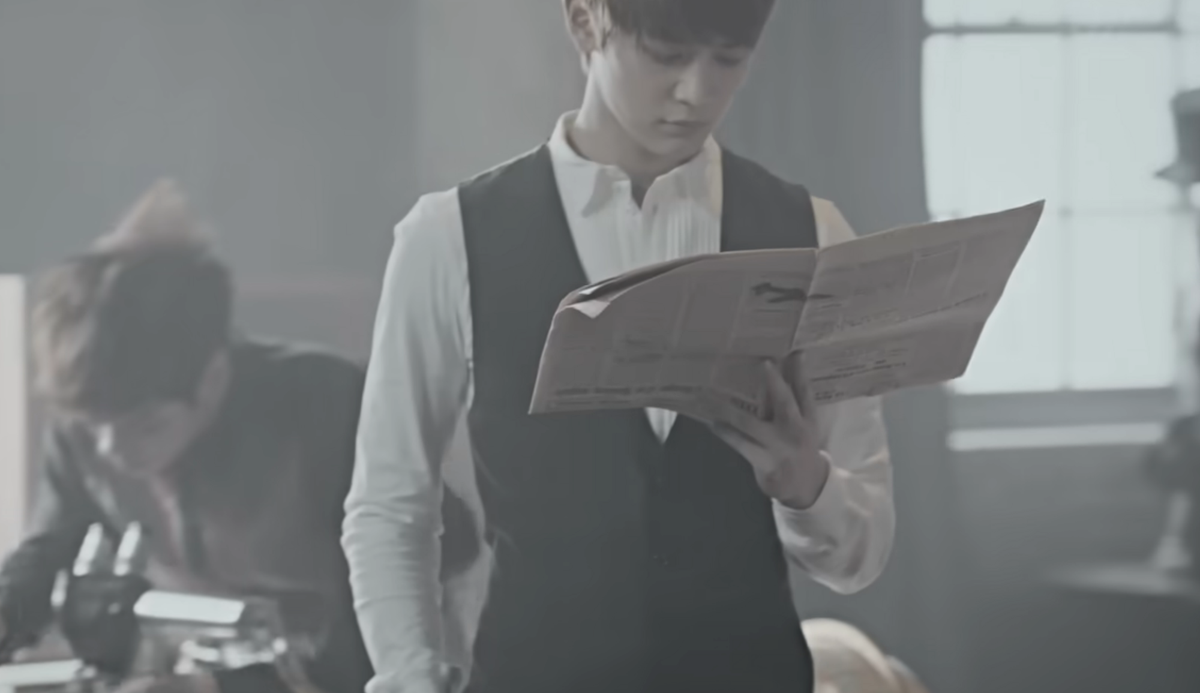
A music video featuring Girls’ Generation and 2PM recently appeared on my feed. It is a now-iconic ad from 2010 for the water park Caribbean Bay. They’re hot lifeguards, all slicked up and sexy. Sex sells in K-pop, but nowadays it’s practically a curse to have heterosexual public relationship for most K-pop stars. But this music video was in a moment when Korea was thriving on the power of heterosexual shipping.
Video and stage collabs were popular, pairing the likes of the Wonder Girls with BigBang being performatively coupled up and dubbed "WonderBang", and Girls’ Generation with not only 2PM but also Super Junior in promos where they literally were supposed to be seen as having romantic interest in one another; members of these and other K-pop groups frequently appeared on popular variety shows like We Got Married — where two popular stars pair up and mimic a marriage — and Hello Baby — they babysat kids and emulated parenting. I also really loved the show with INFINITE and APink where they had to dogsit called Birth of a Family. It was all very heteronormative. It was part of the fun.
Except when it wasn't, of course. Girls’ Generation in 2007 faced a now-infamous “black ocean” at an event where fans simultaneously turned off their lightsticks and went silent, allegedly because fans of other groups didn’t like how the members were getting so close to their favorite boy bands.
But pairing up on-camera was part of the art; it was creatively shaping the way people thought of K-pop stars as attractive and attainable, but only for entertainment’s sake.
"Love is the biggest topic, and it's also the topic that K-pop stars are never allowed to really talk about personally," I once told Explained on Netflix. But they were allowed to sing about it. And love songs have been eternal pop music tools for aeons.
Yet nowadays it's more common to sing about your personal brand or life experiences, and it's perceived as simultaneously more authentic and still simply mimicking the true emotional experience, whether it's in K-pop or any other music scene. Pop art as a form of connection rather than a form of entertainment has, to some degree, made pop music around the world feel like something more important than ever, but also a bit harder to engage with: if you have to constantly be on, when can you turn off? Sometimes I just want a silly love song to bounce around my bedroom to without thinking about what the lore is all about (as much as I love lore!)
We are nostalgic for the past because it always feels like a simpler time even if it wasn't, and that's why songs that sound simpler are gaining popularity again: they audibly sound like they're from another time, yet stil have a feeling of newness since even old K-pop are new discoveries to many people unfamiliar with them. People, it seems, sometimes just want a good pop song and nothing more. Have fun with music, and people will enjoy. I did say, last year, that I thought 2026 may see more quirky K-pop after some great moments last year, and I am really hoping that this is where we're heading. (I can't help but wonder if the collaborative nature of Le Sserafim, ILLIT, and Katseye's "Iconic By Mistake" is similarly representative of some nostalgia and fun, even while making a statement.)
The second generation of K-pop was a simpler zeitgeist moment in many ways, and we reminisce over that. But I do want to remind everyone that it was also a fairly grim time, when idols barely got paid, many got into dangerous, sometimes life-threatening, car accidents rushing to jobs, and slave contracts were enacted and litigated against. Trying to break into the US and derailing your entire career, or else barely registering, was a big topic. (Yes, we're well into it.)
 Tamar Herman
Right now, pop songs are shorter than ever. They're less melodic. But second gen K-pop songs have all the things that made them go viral back in the early days of YouTube, namely the addicting melodies, catch phrases, and easy-to-follow dances, and those things still work in the era of video shorts. But they don't sound like wash-repeat of different trending genres in 2026 because those sounds that were once popular in the late '00s and early aughts haven't made a comeback... yet.
I think we're seeing a change, and as dance music makes a major comeback everywhere with a passion thanks to hyperpop and all the XXpops out there nowadays, we're potentially entering a new era of pop musicality. I'm a little concerned that being nostalgic for good pop music is a recession indicator that most of what I've talked about came about around the crash of 2009 but... Well, we'll see, I guess.
I personally am hoping that we'll start seeing more of a focus on K-pop's impressive vocals returning, as nowadays its complex dances and pristine visuals that really win the day as we all look to the past to see what the immediate musical future of K-pop, and possibly American pop as well, brings.
If you've read this far, you're maybe wondering why I've referenced both my college thesis and the first documentary that I ever appeared in. It's a little bit silly, but here's the reason: "Tell Me" was one of the first K-pop songs I ever remember hearing, so for it to go viral again awash in nostalgia means that I too am awash in nostalgia, and walking down memory lane every time I hear or see a glimpse of things that remind that I am, indeed, Old.
What I'm listening to
This newsletter was edited listening to Secret's Secret Flavor album, and I for one am in love with the 2026 remakes of their songs. I now am wondering if this is a way for someone, whether its the members or some exec, to extend ownership rights over these since I imagine nobody at TS Entertainment owns them anymore. I'm not going to think about it too much and just will enjoy my muscle memory reminding me I still know the Love is MOVE motions.
You might think reading this newsletter that I was a huge Secret fan back in their early days, but no: I just loved music that I listened to all the K-pop songs and watched all the music videos I could. Nowadays, being a fan of one or a few groups is enough to be awash in content, but things were different back then with us having to seek out content as American K-pop fans rather than it being funneled by the algorithm. How things have changed.
What I'm reading
Like 10 minutes before I finished writing my first draft of this, Daesung of BigBang denied dating Kara's Youngji. We are so back, second gen!
"Incidence of Panic Disorder Diagnoses After Celebrity Disclosures of Panic Disorder in South Korea" is an academic paper published in 2024, that I think is very interesting and wanted to share with Notes on K-pop readers for a while. A crew of several MD-PhDs looked at the correlation between Korean celebrities discussing their panic disorders and how it related to diagnoses of panic disorders, suggesting that celebrities truly do move the needle for greater awareness when they share their mental health struggles.
I'm going to hit schedule and go read Lisa's Vanity Cover story: "The Life of a K-Pop Showgirl"