‘The Dark Side of K-pop’ Meets ‘Is K-pop K-pop’?

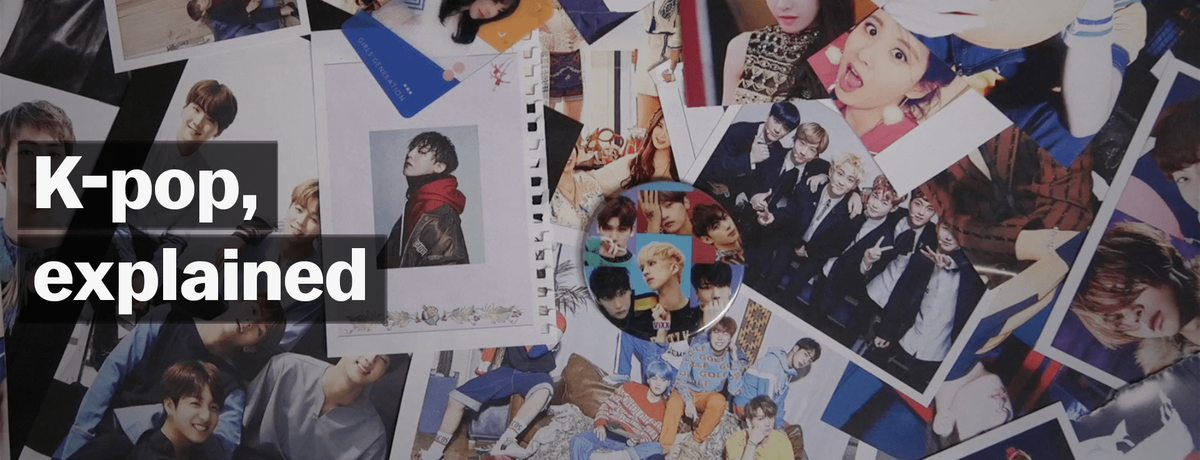
A few weeks ago, it became apparent that we’re witnessing a moment of history: there is a narrative change about how K-pop is discussed.
For decades, The Dark Side of K-pop has dominated western media coverage of K-pop to the point that it has become a commonly used term for nearly two decades of coverage. Born out of the grueling reality of what life is like for K-pop hopefuls and stars, critical reporting is quick to stigmatize and stereotype. Pieces like Factory Girls published by the New Yorker circa 2012, became famously reviled for looking at K-pop and seeing pretty much only dolls and robots, removing any individuality and autonomy.
Over the years, the trope remained and recurred many times in many prominent outlets’ reporting, and often has been called out as xenophobic rhetoric by fans, which I explored in The Lingering Legacy of Factory Girls newsletter in May 2024.
Now, we have a new trending turn of phrase: When is K-pop not K-pop?
A slightly different focus that unintentionally stigmatises the legitimacy of K-pop the industry™️, one that frames itself more as curiosity rather than concerned criticism, has appeared in dozens of outlets and across social media lately. It’s following the rise of English in K-pop songs, and the globalisation and success of groups created by Korean entertainment companies but not necessarily from Korea, or Korea’s industrial structure. Then there’s K-Pop Demon Hunters, which I have discussed not knowing if I really think it’s K-pop or not.
This tropey discourse is nothing necessarily as dramatically othering as the ever-present Dark Side themes, but labelling has historically been used in the music industry to other. If you don’t know what box to put some artist in, then you can’t limit them.
The impetus in the sudden uptick of these conversations is that BTS’s long-awaited post-military return album, Arirang, is largely in English and people think that’s a problem, which has spurred its own responses, especially since the BTS members were seen in their Netflix documentary discussing how much English the albumhad. My social media feeds have been rampant with the back-and-forth for several weeks now.
Considering that K-pop is a term with a meaning that is rather ephemeral, trying to say what acts fit into it or not is rather pointless. I know, because I’ve tried. But I think a lot of the framing of these pieces focus on things that aren’t necessarily the actual definitive features: linguistics and country of origin, which is why I think that although many of the pieces are likely from good faith curiosity, trying to name what is or isn’t K-pop in the current state of the world where lines are being drawn more harshly than ever in certain industries and spaces… It’s just a new conversational trope for performative limiting.
Haeryun Kang addressed the problem with demanding authenticity in K-pop in her piece, “K-pop in English and that Authenticity Thing”, drawing on her personal experiences growing up and her reactions to BTS’s Arirang album. “I’m not any less Korean because I speak English and embrace ‘foreign’ influences. So the short answer to the question, ‘Must K-pop be in Korean?’ is a resounding no, in my opinion. … BTS’s English-dominated album can be interpreted as the band’s own commentary on Koreanness in 2026.”
There is a difference between K-pop and other musical genres and industries, even in South Korea, and we can discuss it. It’s just the general framing of, “Is this thing even K-pop anymore?” that raises hackles, as it is antithetical to the idea that K-pop can become whatever it wants it audiences to hear. It’s an argument that there are ways it must exist, when that has never been the K-pop playbook because the K-pop playbook is experimental and constantly evolving to the point that no singular playbook actually exists; this isn't a sports game, it’s an industrialized art complex. Does the production have to be from Korea in origin? I think that may or may not be the make-or-break of things, ultimately, but the nuance of that is pretty fine. Does it have to be in Korean? We know it doesn’t have to be.
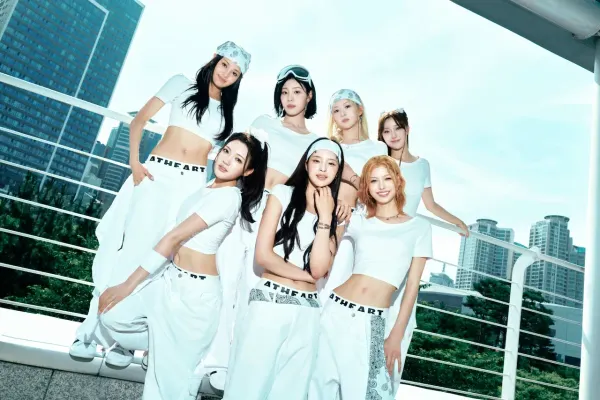
Since its earliest days K-pop has always been a multinational hybrid: many early stars were Korean-American, and singing in non-Korean made K-pop acts hugely popular in Japan. Localisation has always been the goal, which makes a lot of these conversations, to me, even funnier because they’re talking about K-pop as if it’s a definitive thing rather than a fluid beast of an industry that changes to the winds of the market. I don’t know if Katseye are K-pop; I usually write that they’re K-pop-adjacent, because that settles my mind. I care less about how I define someone and more how they think of themselves, and I imagine most people associated with K-pop want to be thought of themselves rather than a label.
As I wrote this article on my flight to Las Vegas – the hub of American capitalist opulence transformed into an homage to BTS – Luminate sent out a newsletter about how South Korea needs to look beyond K-pop for artists to preserve its musical industry’s long term growth. “Data shows only 48 artists were responsible for 39% (or 50 billion) of K-pop’s foreign streams in 2025.
While it is common for a genre’s hits to generate a disproportionate share of its streams, K-pop’s listenership is less equitable than that of other globally popular genres, including American R&B/Hip-Hop, which saw 112 artists account for 36% of its foreign streams last year.
Faced with an increasingly competitive global market and the previously noted top-heaviness of K-pop, South Korea must look beyond the genre for cultivating its next generation of artists to catalyze growth and protect the country’s outsize cultural influence.”
I don’t disagree with this general idea, but I am disappointed by the framing of the piece since it doesn’t actually define K-pop and doesn’t explain what other artists people in Korea are actually listening to, but just says that for long term growth Korea needs to go broader beyond 40 or so top acts. That is not wrong; this is just simply the truth, genre aside, that South Korea’s music industry is dominated by big players.
The narrative is overlooking the fact that other music does exist: In Korea, idol music is just one genre, and in recent years there have been many articles about how Korea’s industry is diversifying. Trot is popular again, and pansori-pop and gugak are making a good case for themselves, while pop-rock bands and alternative acts also have a presence. These just may not be popular internationally – or in the US, where Luminate/Nielsen is based – on the scale of the biggest names in K-pop, and that’s not necessarily an artistic problem but an industrial and numeric one. It’s not quite the dark side of K-pop or is K-pop K-pop, but if you’re saying “K-pop has a problem” at least address what you think K-pop is or isn’t. You’re soon to find that limiting K-pop limits your idea of what creatively can exist in tandem with one another.
A note on Notes
You may have been wondering where I was last month. A lot and also very little happened in my personal life, and I didn’t write anything. I’ve been terribly unregulated about my writing this year, and ended up in a devastating procrastination cycle where I write nothing, get mad about it, then feel depressed that I’m a loser who hasn’t written. I love writing, I love crafting ideas into paragraphs and stories that I hope resonate with others. So I’m going to share here that I’m planning on going back to a bi-weekly publication schedule, one more general about thoughts or a review, and another featuring either an interview or a business-oriented story to try to get things back on pace. If there are any topics that you’re curious in hearing about, or you’re a press person looking to discuss possible coverage, please email me: tamarhermanwrites@gmail.com
What I’m listening to
I wrote most of this on a plane to Las Vegas to see BTS, and edited in my hotel room at the Strip, while revisiting their discography, and ruminating about themes across it and their latest album, Arirang.
Prior to my pre-concert deep dive, I was listening to the Korean band Sailor Honeymoon’s new song,”Pickle”.
Some albums I’m also enjoying are Le Sserafim’s Pureflow, Pt. 1, Taeyong’s Wyld, and I.O.I’s return, I.O.I: Loop.
What I’m watching
I just started The Wonderfools and My Royal Nemesis on Netflix after a drama-less period when I binged the entire The Office for the first time in what I can only blame procrastination brain on.
What I’m reading
I’m stuck at the moment as a writer, so reading Stephen King’s On Writing: A Memoir of the Craft for inspiration, even though King’s work all scares the the hell out of me.