In Conversation: dodree on blending traditional arts with K-pop

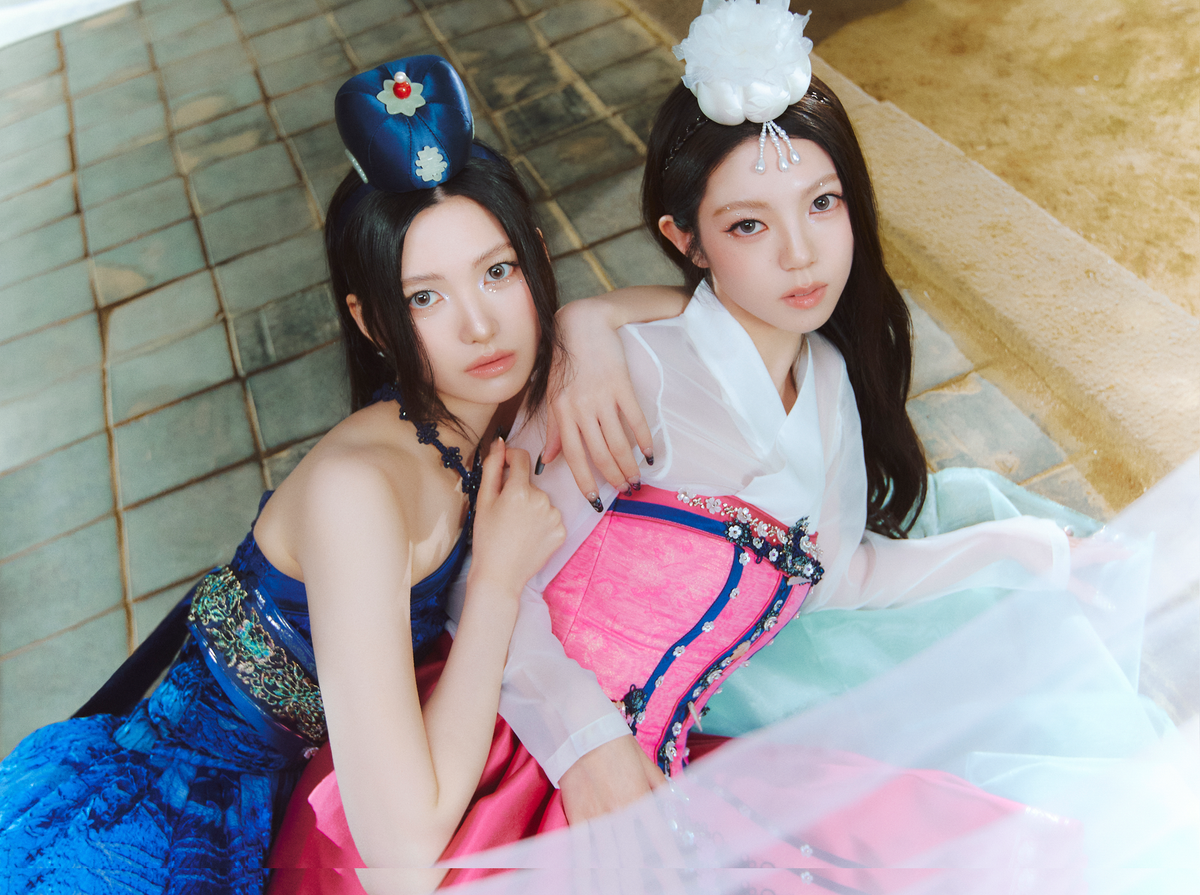
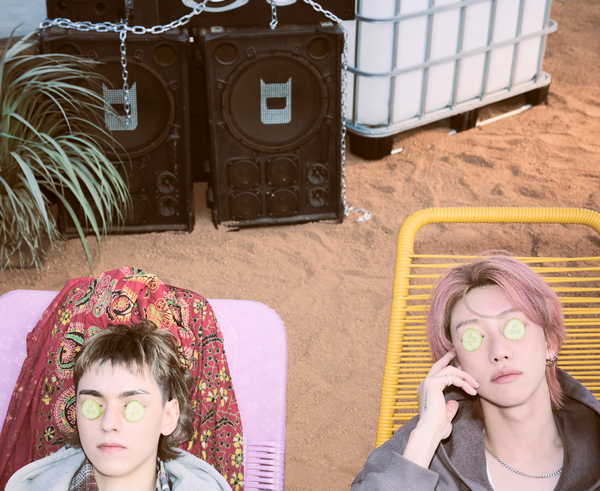
The fusion of traditional Korean culture and popular culture via K-pop has been around for years, with acts like VIXX, BTS, Blackpink, Stray Kids, and Oneus incorporating elements and aesthetic of traditional Korean culture and music. Now there's dodree, a duo featuring members NaYeongjoo and LeeSonghyun, who are traditionally trained gugak, or Korean national music, performers bringing their backgrounds to the K-pop stage.
NaYeongjoo, who comes from a family of pansori performers, and LeeSonghyun, a professionally trained dancer, debuted under INNIT Entertainment, a subsidary of JYP Entertainment, in January of this year. The two were competitors on the competition show, THE DDANDDARA, or The Entertainer, which began airing in late 2024 and ended with them as two of the finalists in 2025.
Coming together as dodree with "Just Like a Dream" in January, the two debuted in an environment where there's a lot of interest in the future of K-pop, and what that even means. "Is K-pop even Korean anymore" (and does it even matter) is a common conversation of the day online. (I wrote about it in ‘The Dark Side of K-pop’ Meets ‘Is K-pop K-pop’? a few weeks ago, in case you missed that). dodree are essentially answering the question of what a heavy-emphasis on the Koreanness of K-pop can look like when you base your identity around classical culture, traditional training, and blending them with modern performance sensibilities.
"Sometimes, even with us singing a single song, I want to completely let go of my traditional vocal style for certain sections. But because I spent my whole life singing pansori, it's really not easy to switch it off completely" - NaYeongjoo
According to the members of dodree, this isn't easy: everything, they say, has been part of the challenge of blending the modern K-pop style with gugak influences. But none of that shows in their music videos or their other performances, or their social media channels, where it looks like they've figured out a seamless formula for blending BPMs and vocal techniques.
As they approach the second half of their first year as a duet, dodree chatted with me for Notes on K-pop, about their music, the challenge of their mission, and what they're looking forward to.
Tamar Herman: Thank you for making time to chat. I know you are probably really busy; dodree is all over my Instagram feed, so I'm curious to hear about how you two are doing lately?
NaYeongjoo: It's the first time we're doing this international interview, so we're a little nervous.
So for starters, I'm furious about how two feel about the attention since your debut based on your unique concept and skillset?
LeeSonghyun: Honestly, we received so much more love and support than we ever expected. We are incredibly grateful, and these days we've just been really happy enjoying this journey.
NaYeongjoo: We actually had a lot of concerns at first, since we're blending K-pop with traditional Korean sounds. So, we weren't sure how people would respond. It felt like a bit of risk. But we received, so far, a lot more love than we have ever imagined, not only in Korea, but also from international fans as well. That honestly surprised us. More than anything, we're incredibly grateful. Seeing people connect with our music has become a huge source of motivation, and it gives us energy to keep growing and working even harder.
Why do you think that people are so interested in your music?
NaYeongjoo: I think because it's something new, something different.
LeeSonghyun: I think it's because we're introducing something people haven't really experienced before. It's a genre and sound that most listeners aren't used to hearing. We're combining those unfamiliar traditional elements with K-pop in a way that feels approachable and accessible. So that sense of the freshness has made it easier, for a wider audience to connect with our music.
Is this the sort of music that you hoped you'd be creating when you decided that you wanted to be singers?
NaYeongjoo: I've been singing since very, very young, and my background is actually in pansori, traditional Korean vocal music. When I was in high school, I saw a crossover performance that blended traditional music with jazz. That had a huge impact on me, and I remember thinking, "This is exactly the kind of music I wanted to make someday." So, that's how I started.
LeeSonghyun: So I actually majored in traditional Korean dance from a young age. Because of that I had many opportunities to experience traditional Korean music growing up, and naturally I became fascinated by it. That interest eventually led me to want to incorporate those sounds into the kind of music I make today as a singer. I realized I wanted to become someone who could introduce Korean culture and Korean traditional art to the world through music.
I know you were on THE DDANDDARA together, but what was your first impressions when you two met?
NaYeongjoo: When I first met Songhyun, I thought she looked very cold and might be difficult to get along with.
LeeSonghyun: I also thought unnie was like that, a little cool and like a chic city woman, a little intimidating.
So how do you feel each about each other now, if you had that same impression of each other?
NaYeongjoo: So we've been working together for about a year and a half now, so naturally we became much closer. That first impression that seemed cold and difficult to approach is not true.
LeeSonghyun: It disappeared. [Both laugh]
It's funny that you both had the same impression of each other. Do you think you two are similar in other ways, too? Or similar in that way, still?
NaYeongjoo: After spending so much time together, now we realize our personalities are actually quite different, but somehow those differences complement each other really well, so we work really well together as a team.
You both have have classical training, so I'm curious about how you ended up en route to competing in a pop music survival show, and what was your path to getting there?
NaYeongjoo: The audition was looking for an all-around entertainer, someone who could sing, dance, and act. I remember seeing that casting announcement, and the moment I read it I just felt like, 'this is me. So I have to do it.'
Did you expect to go maybe the more traditional K-pop route, or you wanted something more unique like this? What were your expectations or hopes before you went into it?
NaYeongjoo: I wanted to do something a little bit different than traditional K-pop, so I wanted to create a style of K-pop that reflects my own individuality while also introducing Korean traditional music to audiences around the world, so that's always something I wanted to hope to achieve. So through that audition, I kept challenging herself one step at a time; each stage pushed a little farther, more my styles. So I gradually found my path right now.
LeeSonghyun: I also heard that the audition was looking for an all-around entertainer, someone who could sing, dance, and act. So as soon as I heard that, I knew I had to apply and decided to do the audition. And even on the audition stage, I always tried to showcase the beauty of Korean culture. I made a conscious effort to incorporate traditional Korean dance and Korean vocal techniques into every performances because I wanted people to experience that unique Korean aesthetic through all the stages.
What did you two think when you guys came together to debut in dodree?
NaYeongjoo: As we were signing our contracts [with INNIT Entertainment], we both had the feeling that we'd probably ended up becoming a team. We kept thinking that we're going to debut together so we were already kind of expecting it. When it was finally confirmed that we'd debut as dodree, we were like, "cool, I knew it."
Why were you guys expecting it?
LeeSonghyun: Because on the audition show, only the two of us were contestants showcasing performances rooted in traditional Korean culture.So it just naturally felt like we might end up becoming a team, and because [NaYeongjoo] majored in Korean music, and I majored in Korean dance, so it felt natural. We just thought it would make sense.
You guys have talked about your traditional training, but I'm curious what is your training or interactions with K-pop before going on the show?
NaYeongjoo: Because I spent the whole life training in pansori, that vocal style had become like second nature to me. But realized that if I wanted my music to be more accessible and comfortable for a wider audience, I needed to lighten that heavier, traditional vocal technique, and blend it with more contemporary style. I began learning a completely new vocal approach. Since then, I've been constantly thinking about how to blend the appeal of contemporary music with the unique beauty of pansori in a way that feels fresh and compelling. It's something I'm still exploring and refining even now.
Do you generally like fusion music, then?
NaYeongjoo: I've loved fusion music for a long time, and it's kind of the music she always wanted to make. But beyond simply blending traditional music with Korean pop, K-pop has become such a global phenomenon so I felt like combining traditional Korean music with K-pop, that could introduce the beauty of Korean traditional music to audiences all around the world a little more better, so that's why I've been making it.
How do you two think about your music when you're coming together, what makes it special that it's specifically you two?
NaYeongjoo: At our core, the music is built on K-pop, but blended with our own voices and the sound of traditional Korean instruments. That's why we wanted to describe our style as crossover pop.
What is your favorite song or lyric that you've ever sang as dodree?
LeeSonghyun: My favorite song that we've released so far is "Lilac". It was the pre-release track from our Hawwah album. Out of all the lyrics in the song, my favorite is the line: "향만 맡고 가지요" ("Then just breathe in its fragrance and go"), because the melody is very familiar to me because it's borrowed from the traditional folk song Ongdalsam" ("Sweet Spring") line, "at least have some water before you go." Because of that childhood memory, it felt like melody we've grown up hearing since forever so it was very special the moment I heard that.
NaYeongjoo: For me, it's the line from our second digital single "Hawwah": "Run, you better run, you better run." Because even though the lyrics keep saying, "run, you better run," I actually think there's a bit of irony in that. Rather than encouraging you to escape, it almost feels like the song is pulling you back in so you can't get away. So, for me, the line says that you're going to fall for dodree now, so you won't be able to leave. It's the feeling of drawing people in and holding on to them, so that's why that's my favorite part.
Is that your optimal way of getting new listeners, to pull them in so that they can't escape your music?
NaYeongjoo: Yes [laughs]. I like the idea of pulling everybody in.
Why do you guys think that now is the right time for you to make this sort of crossover pop music?
NaYeongjoo: I think the timing is perfect right now because K-pop is more popular around the world than ever. With things like K-pop Demon Hunters becoming such a global hit, there's a lot of attention on Korean content right now. People are becoming more interested in Korean culture as a whole: K-culture, K-beauty, and so many other aspects of Korea. So it feels like this is the right moment to introduce his kind of crossover music to a wider audience.
As you were talking about the "Hawaah" lyrics, I actually was thinking about K-Pop Demon Hunters, and how there's a whole point within it that the music of K-pop idols is alluring and addictive to the point of exerting a great power on fans. Do you think it's by chance that both the movie, which incorporates some traditional elements, and your music, are both attempting to draw people in with this opportunity to go deeper into the history and tradition of Korean music?
NaYeongjoo: Rather than thinking about it as the next step for K-culture, we hope our music can naturally seep into people's lives. We've heard from a lot of international fans who don't understand the lyrics or even the language, sometimes who aren't familiar with Korean culture. But they still tell us that but they still us that listening to our music made them cry. So I think there's a really powerful emotion that we show, that music can communicate emotion beyond the language or culture, so that's the kind of connection we're hoping to create with our music.
We also noticed a lot of people from around the world are making cover videos of our songs, so seeing people singing our music in different languages and from completely different culture background has been incredibly moving. It made us realize that this is exactly how we like music to grow, not by forcing itself on people, but by naturally finding its way in our lives, to becoming part of them.
What's been the biggest surprise for you to see people, doing based on your music?
NaYeongjoo: The most shocking, surprising part that I experienced was when fans were telling us about how they were crying even though they don't know what the lyrics are about. Why? Why are they crying?
LeeSonghyun: Even some fans are covering our dance moves. Even though it's not traditional dance, it's a more Korean dance style. Fans that carefully recreated those movements in their cover videos was really surprising and incredibly meaningful for us.
Something that you were saying was that fans were crying for your lyrics, even though they don't understand them, so I'm kind of curious... Pansori as an art form is very lyrical, and it's also very emotional. So, do you feel that you're – not to make a bad pun – hitting the right notes of blending both the modern and the traditional so that you're evoking that sort of reaction from people?
NaYeongjoo: So pansori is not actually us singing, it's actually us telling a story. The narrative that stays the same: Chunhyangga is Chunhyangga, Heungbuga is Heungbuga. It's taking the audience onto the journey of the story, so pansori performers are storytellers above all us. In that sense, through our music we're telling our own story and building our own narrative, that's really at the heart of what we're trying to do.
Of course, it's difficult to capture the same depth of emotion and storytelling as a full traditional pansori into 3-4 minute short K-pop songs. That's simply not possible. What we're trying to do is weave those traditional melodies and emotional nuances into our music, even if it's just a brief phrase or a short musical passage. We make a constant, conscious effort to preserve that spirit and emotion within the modern songs.
Do you have a story in mind that you hope people are hearing as you sing these songs?
NaYeongjoo: The story thinking right now that we're trying to make is a coming-of-an-age story that's dodree finding our own path and discovering who we are as an artist.
What do you hope your story is in 5 years or so from now?
LeeSonghyun: Hopefully in five years dodree will be the team that everyone will know, that everyone will recognize. We hope that people will hear our name and immediately know who we are.
NaYeongjoo: And also, in five years, dodree will be going on Coachella!
I know you guys want to tour big and get everyone to know you, which is obviously very exciting, but do you ever feel burdened by what you're hoping to achieve? Obviously K-pop is really big, and there's a great depth of history with what you're doing, both from the pop standpoint and also from the more cultural heritage standpoint. I'm curious if you ever feel, not a burden necessarily, but the import of what you're doing?
NaYeongjoo: Because we're introducing traditional Korean music to a wider audience, and because we formerly studied this art ourselves, we feel a very strong sense of responsibility. So more than feeling burdened, we feel proud, and we want to become artists who can represent and share Korean culture with confidence and pride. We have to overcome challenges and succeed. Our dream is that one day people all around the world will be wearing hanbok and singing our songs together.
What are some challenges that you feel like you currently are facing?
NaYeongjoo: It's always challenging. Everything is challenging. Every step of the way comes with the new challenges, and we've realized that there's really no end to learning. No matter what we're doing, there's always something new to improve and grow from. Coming from a traditional music background, we're still learning just how different vocal techniques are in this pop world, so to blend those two styles naturally, we have to learn completely different ways to make it comfortably mix in both. So we're still learning the technique and process. There are a lot of things that still feel uncomfortable, but it's still exciting to keep exploring techniques to combine these musical styles.
What's something that you faced or struggled with particularly throughout all of this?
NaYeongjoo: Sometimes, even with us singing a single song, I want to completely let go of my traditional vocal style for certain sections. But because I spent my whole life singing pansori, it's really not easy to switch it off completely so that's something I struggle with and am continuing working on to find that balance.
Do both of you feel like it's a struggle to find that balance?
LeeSonghyun: It's really hard, always, to make the balance between K-pop and Korean traditional performance. It isn't easy, so we'll continue to try.
You two are obviously trying something really distinct as artists, and I'm curious about who are some of your musical or artistic inspirations are?
NaYeongjoo: Rather than picking one particular inspiration, we're currently trying to expose ourselves to as many different styles as possible. We're challenging ourselves with a wide range of genres, and experimenting with different musical approaches. Lately, we're listening to a lot of different kinds of music and watching a variety of performances to broaden our perspective.
Whose performances have you been enjoying watching?
NaYeongjoo: In general, we're studying a lot of different K-pop artists. K-pop artists all different styles, their own styles, so we're researching everything.
LeeSonghyun: There are many music videos that have a lot of Korean cultural spots so we're trying to research and look at those.
What's your favorite music video?
LeeSonghyun: For me, Blackpink "Pink Venom". Stray Kids as well. Stray Kids especially has a lot of Korean elements in them so we love it.
Those are very strong and powerful performances. Yours are strong and powerful, but there's also an element of elegance in your performances. You evoke classic style and imagery, while drawing on more traditional musicality. So, I'm curious... Do you hope or imagine yourself in that sort of environment, or the sort of performances like the ones you've mentioned watching?
LeeSonghyun: Yes, we'd like to try.
This is for a newsletter called Notes on K-pop, so I always ask everyone, what's your personal relationship to K-pop, and what do you think of K-pop?
NaYeongjoo: K-pop has become one of the best bridges for introducing Korea to the world, so it's a powerful way to share not only Korean music, but also our country's culture, traditions, and artistic heritage with the global audience.
And then, what's your personal relationship to K-pop?
LeeSonghyun: For me, K-pop has always been a source of strength and comfort. When I was studying abroad in the UK, everything felt unfamiliar. The culture, the environment, just everything. But during that time, listening to K-pop gave me a lot of confidence, comfort, and helped me get through those difficult times.
Music is good for that!
That actually brings me to my next question, which is about a big topic of the day regarding the language of K-pop and what makes K-pop K-pop. Do you two feel like it's particularly important for dodree to sing in Korean, or do you want to incorporate even more English into your music?
NaYeongjoo: To be honest, I don't think the language itself is the most important factor. It really depends on the mood and messages of each song, so we're choosing whatever language feels the most natural way and fits the music best. That said, I don't think I could ever completely take Korean out of what we do, because the big part of our mission is to introduce traditional Korean music and continue sharing Korean sounds with the world. Because of that, Korean is very essential to our music. The Korean language is the best way to express our emotions and sensibilities and spirit of Korean culture that we want people to experience, so we will try to mix the balance.
That makes 100% sense. It's like how opera can be in many languages, but still has that same spirit from the original Italian form.
NaYeongjoo: [Laughs and throws a thumbs up]
Someone asked me this question yesterday when I was taking a pottery class and I thought it was really fun so I wanted to ask you. Personally, what's something you really like right now that you want other people to know about?
LeeSonghyun: I've been watching a lot of movies and TV shows lately. I really want to see Toy Story 5, but haven't had a chance to watch yet. My favorite show though lately is Manager Kim [aka Agent Kim Reactivated].
NaYeongjoo: For me, I really love food so much. I love raw fish, sashimi, but it's hard to say I like it because in Korea in summer you're not supposed to eat it because it's not good timing.
Obviously, summer is very hot but aside from cold weather and sashimi what else are you looking forward to during the rest of the year?
NaYeongjoo: To be honest, I don't know how much we can allow to say about the upcoming schedules yet.
LeeSonghyun: Personally, my hope is to get to perform on the year-end music show.
NaYeongjoo: I really want to enjoy Christmas. We spend Christmas with our families all the time, but this will be the first Christmas since debut so I'm curious to see what that moment really feels like. I'll be able to look back on everything I've experienced during the first year, and probably reflect on how much I've grown, and spending with family will be very special.
Do you have a big family who you're hoping to share this with?
NaYeongjoo: Nope. My father and mother, and two sisters.
LeeSonghyun: I'm actually waiting for January 1st, because my youngest sibling turns 20 next year. Everyone in the family will finally be an adult.
When you look back at your first year as dodree, what do you hope you remember about this year and this experience?
NaYeongjoo: A cool year. I want to remember it as the year I achieved a brand new goal. The first step was [debuting as] dodree, and challenging ourselves a completely new way. We made the two albums, and we'll look back and think, 'Wow, we really worked hard'.
LeeSonghyun: Pretty much the same, but I want to remember it as the very beginning of the dodree. Everything is the first. I want to remember that as the beginning.
Thank you guys so much for making time. Before we go, I was wondering if there's anything that we just didn't discuss that you wanted to discuss.
NaYeongjoo: To our fans now, and to those who may discover us in the future, we'll continue finding and developing dodree's own unique color. We hope to show you many different sides of ourselves and share even more of our charms, so please keep watching and supporting us. And we also hope you will continue taking an interest in Korean culture, Korean music, and traditional Korean art. I love you!
This interview was conducted in English and Korean with the support of an interpreter, and edited for clarity.