American Award Shows, Cultural Hegemonies, & Weakening U.S. Soft Power

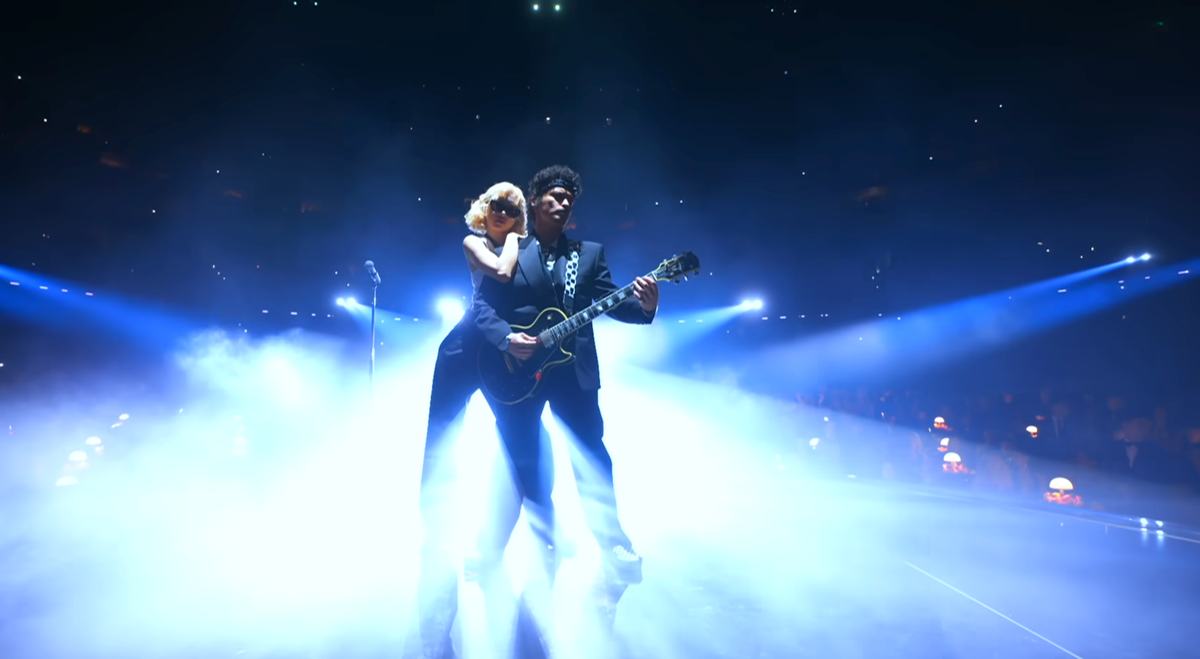
On June 16, The Grammy Awards announced five new categories for the 2027 69th Grammy Awards: Best Asian Pop Music Performance, Best R&B Collaboration or Duo/Group Performance, Best Traditional Pop Vocal Performance, Best Traditional Folk Album, and Best Latin Song.
According to Grammys CEO Harvey Mason jr., "The changes advanced by our Recording Academy members speak to the breadth of today's music industry and the many genres, crafts and creators shaping it."
The rulebook for the Awards lay out the category in-detail:
"Eligible recordings typically feature melody-driven composition, mainstream pop songwriting, and commercially oriented production, as recognized within their respective markets, and may incorporate elements of pop-adjacent styles such as pop-rock, pop R&B, and other related forms. Recordings in this category are often characterized by genre-blending arrangements, layered production, and dynamic structural shifts designed to support both audio and performance-based delivery.
Recordings must feature meaningful use of one or more Asian languages. An Asian language should play a significant role within the song in bilingual or multilingual structures such that the recording is identifiable with that language. Recordings performed entirely in an Asian language are eligible. Incidental or minimal use (e.g., isolated words, adlibs, or brief phrases) does not qualify. Recordings performed entirely in English are not eligible in this category and remain eligible in other appropriate categories.
The musical style is determinative of eligibility, not the ethnicity or nationality of the performer(s)."
While it's ostensibly an attempt at incorporating talent into the Grammy's who have been excluded, it's also seen as a decision to include but not incorporate. The immediate reaction was largely negative on social media: to many, the new categories, especially Best Asian Pop's introduction, were a continued slap in the face towards non-white artists, and especially othering of non-American artists.
"The Grammys 2027 Best Asian Pop Music Category Is Just Another Form of Segregation," wrote Ayan Artan for Teen Vogue.
"Recognition or sidelining? Reactions mixed as Grammys unveil Asian pop category," reported Pyo Kyung-min for the Korea Times.
The emphasis not only on language – the rule against English is going to be particularly interesting to watch how it plays out considering K-pop has incorporated more English in recent years, ostensibly to cater to the U.S. market, but the Grammy’s is now saying that’s not Asian pop – but genre-blending arrangements, layered production, and dynamic structural shifts, is pretty much code for "K-pop idol music" or "Asian pop influenced by K-pop idol music" (ie acts like XG or Bini), which has led to a lot of people believe this is particularly just a way to give popular K-pop acts in the U.S. like their laurels, getting fandom support and viewership, without incorporating them into the major categories.
This is nothing new for The Grammy's, which has regularly been accused of sidelining categorizations of artists into ethnic or musical niches rather than recognizing artists in the larger categories.
"Separate But Equal: Did The GRAMMYs Segregate Country Music?" wrote Terrell Couch for Essence in January, in response to the Academy splitting Best Country Album into Contemporary and Traditional, ostensibly in response to Beyoncé winning that main category, which traditionally went to White artists. It also, of course, came after years of Beyoncé finally getting her long-awaited laurels as Cowboy Carter, that same Best Country Album, was recognized as Best Album of the year in 2025; she had been up for the award 5 times since 2010. You can't help but wonder if the Best Latin Song category is a similar reaction to Bad Bunny sweeping this year.
Coming on the heels of BTS's Arirang album and tour, and BLACKPINK's Rosé opening up the Grammy's last year with her Bruno Mars-collab "APT.", there is a lot of potential for this year to be a big K-pop moment for the Awards. There's a sense that the Grammy's want to win over the very-engaged fandoms of K-pop acts, and creating a K-pop-only category would be too niche so going larger Asian Pop looks more inclusive and accepting, rather than sidelining.
If this all seems very familiar, it's because it is: We've lived through this for other American award shows. Back in 2019, the VMAs added a K-pop category, and I wrote "The New K-Pop Category At The VMAs Is Too Little Too Late" for Forbes, given that K-pop music videos had been monumental for years (If not for anything else, "Gangnam Style" came out in 2012!) Last year, I wrote about how K-pop the idea not K-pop the institution reigns at the Grammy's, and to see this othering as the response rather than simply recognizing talent in already-acknowledge categories is another misstep.
This all comes at a time when the United States' cultural worth is slipping, both internationally and among younger audiences: soft power doesn't come from Hollywood anymore, but award shows like the Grammy's cling to their taste-making power and legacies even as the world looks to other industries and communities for entertainment than the old guard of the U.S.
"Cannes Proves the Movie Star Isn’t Dead. We Just Have to Look Beyond Hollywood" reads a Time headline from May.
"I was the US soft power czar. Our reputation may never recover from this" wrote Richard Stengel, Barack Obama's Under Secretary of State for Public Diplomacy and Public Affairs, for The Guardian in April.
This has been a gradual shift over the past decade or so, with Parasite's Oscar win a major moment of change, but 2026 feels like a year where the soft power institutions of America, including The Grammy's, are trying to show that they're aware of how popular other international industries and stars are becoming, without sidelining the good ol' U.S of A in its 250th year.
It's hard to deny that some of the most talked about shows this year online have been the Canadian-produced Heated Rivalry and China's Pursuit of Jade. K-pop Demon Hunters, created by the Korean-Canadian director Maggie Kang, has spent an entire year in Netflix's Top 10 list. Asian stars are the faces of major fashion houses, and in-demand for red carpets across the world. Everyone is, of course, Chinamaxxing.
I think this is also specifically interesting re the Asian Pop category being used to limit at a moment when the U.S. government just blocked Anthropic's latest AI on security concerns allegedly due to a South Korean telecom company, SK Telecom, getting access to it while having a partnership with China, despite SK Telecom denying that any partnership exists. This isn't an AI newsletter, but I do work at a tech company in my day job, and so I follow industrial developments. And it doesn't feel like an accident that the U.S. government is trying to hinder South Korea, and allegedly China, just as they're rising cultural powerhouses in the U.S.
Is there truly a connection between the Grammy's new Asian Pop category and the government halting an American tech company's launch of new AI models because of international politics? Absolutely not. But I think we need to look broadly at trends, and the trends are hinting that the American industries of arts and government are both reacting defensively even if it harms themselves. American hegemonies still cling to power, but everyone can see that the emperor has no clothes.
American award shows are first-and-foremost American; there's no reason to truly assume they'll ever happily incorporate non-American acts at scale. But handout inclusion for the return of artist attendance and, in turn, fan power, is an attempt to revamp without really changing: 2026's Grammy Awards were the least-viewed show since 2023, but numbers have been dropping for years steadily as people simply don't watch TV, but instead talk on social media. The Grammy's have been trying to change their reputation and accusations of bias by doing things such as including more diverse voting and professional members to offset accusations of bias and exclusion – and recent years have indeed seen awards go to more diverse acts –, but audiences are even smarter than ever when it comes to industry movements, and they're picking what they're supporting in 2026. And what they're supporting is entertainment and artists that they love, regardless of geographical boundaries and categorization.
I assume that, depending on the nominations and how the 2027 Grammy Awards play out, some fans, artists, and entertainment companies will be thrilled with whomever wins the Asian Pop artist award, and others will be pissed. It's going to be fascinating, and probably infuriating, to witness, but even if it's a bid for relevancy, I'm sure there will be a lot to talk about after.
First things first: Notes on K-pop now has an Instagram and new logo!
What I'm reading
"Growing up with K-pop", an interactive story from The Pudding that explores K-pop generations by Minji Kim & Eunice Lee with Caitlyn Ralph.
"K-pop Fans Are Calling Out Creepy Deepfakes of Idols" by Janus Rose for 4o4 Media. Back in 2019, Rolling Stone reported that upwards of 25% of nonconsensual deepfakes were of women of Korean descent, particularly unnamed K-pop stars.
"K-pop's Long American Game" by Woosek Ki.
"Meet the online superfans who turned their Stan Twitter experience into full-time social media jobs" by Emma Madden for Fast Company.
What I'm listening to
"Iconic by Mistake" by Le Sserafim, ILLIT, and Katseye
This feels like it was someone's good idea and I'm humming it throughout my day so it definitely has stickiness, but the production feels like it could have been more interesting rather than straightforward, and really played with the members' vocals and the dynamics between groups. I wish there was more cross-singing between girl groups, rather than 1/3 each for each group.
izna's "Metronome"
This might be the clubbing song of summer, but it's early days of summer still so let's see. I love songs that engage with what music actually does to people when we dance, and this song is a bit heavy-handed in that but it's impossible to deny that for some of us, music truly does take control.