2025 ends with K-pop overlooked by success 'Of K-pop'

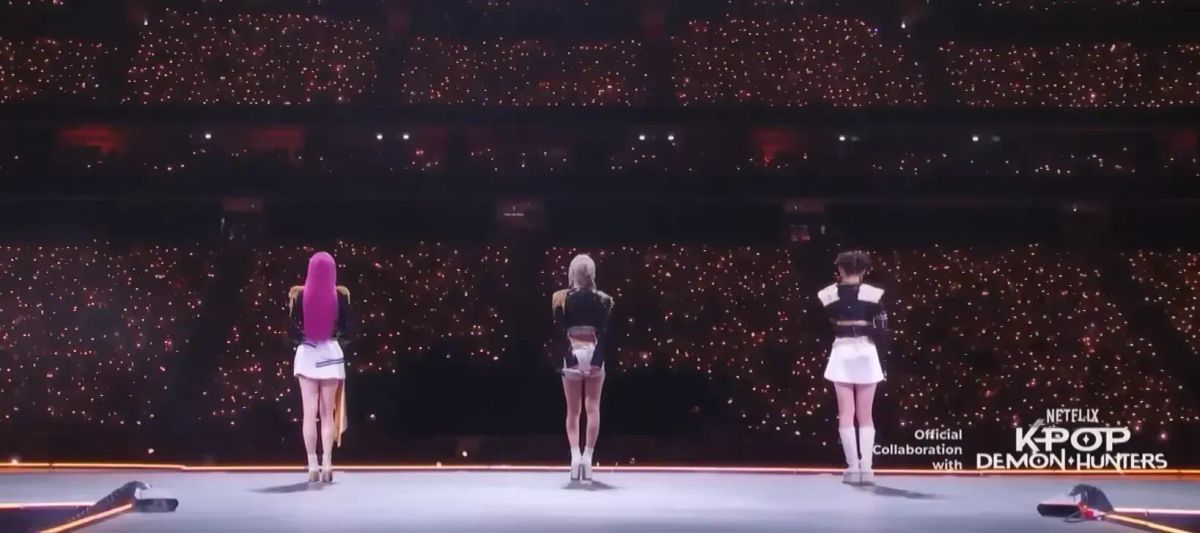
I was in Korea last month, and spent a lot of my time running around to have coffee with industry friends. One journalist and I were talking about the success of K-pop Demon Hunters, and what 2026 would bring, and I keep thinking about something he said to me: "Industry insiders think K-pop is a success when it's no longer Korean".
This is not a new idea, necessarily, as it feels like everyone on the Internet has thoughts about what is or isn't K-pop, and K-pop's success, particularly in 2025.
There's even a whole book about how the "K" and K-pop are in conflict: George Mason University professor Gyu Tag Lee published "K-Pop in Conflict: Between Local and Global Music" in 2020. But in Korean, the title is, in fact, "The Conflicting K, Pop: ....", separating the entities.
I wrote a bit about how this is playing out in my recent piece, K-pop the idea not K-pop the institution reigns at the Grammy's. And it's not just at the Grammy's: many people are trying to find alternatives to K-pop's idol industry, and how it treats people and creativity: "Meet The Deep, K-pop’s antihero" Dazed recently published, a few months after, "Effie is South Korea’s first hyperpop hero". Balming Tiger calls themselves alt-K-pop. Ejae, of K-pop Demon Hunters fame, has been applauded for her success after not making it under SM Entertainment.
These artists are all impressive, and The Deep's KPOP B!TCH has been on-repeat lately. But I find myself noticing a theme among all the writing about these artists, which is that there's the constant sense of "K-pop, as it currently is, is Bad and needs to be defeated" rather than "K-pop, as it currently is, needs to be fixed", which is more aligned with my personal feelings.
I was actually supposed to spend the day writing my list of my top K-pop songs of 2025, but I've had a bit of a week and don't really feel inspired to write creatively at the moment. But I was reading a piece for the New York Times' written by Jon Caramancia, "In 2025, K-Pop Battled Its Demons", and it left me with a lot of thoughts about how 2026 is going to look for K-pop.
I don't necessarily disagree with the premise of Caramancia's piece: NewJeans and Min Hee-jin have essentially lost against Hybe, with NewJeans returning to the company (though between writing this and publishing, Danielle has since been removed from the group); BTS's return will be the biggest K-pop story of next year; K-pop Demon Hunters does depict the relationship between fans and artists via metaphors.
What I disagree with is a two-paragraph depiction of what's going on beyond K-pop, as if they're not an alternative artistic movement, but simply exist as an answer to K-pop:
"More important, though, there is ample innovation happening in South Korean music outside of the conglomerate system. Much of the best feels as if it’s in an unspoken dialogue with the K-pop that for many years hungrily ate up influences from abroad, and then assembled them into an unlikely and overwhelming new package. That maximalism had a lot in common with the hyperpop production that began to rise to dominance in the late 2010s, and which has found new life in a crop of young Korean artists — Effie, the Deep, Kimj and more — who are making some of the most provocative pop of today.
It’s the sound of a generation of path breakers raised under a suffocating system that they wish to both exist outside of and also indirectly comment on, if only to eye-roll. It has shards of K-pop bombast buried deep within, but what’s built atop it is novel, challenging and utterly modern. As the K-pop industry fends off fatigue and anxiety from within, it may have already inadvertently given birth to the sound that will upend it."
I have consistently talked with friends about feeling bored of K-pop, so agree about fatigue and anxiety. But I disagree in that while these artists are 100% in "dialogue with K-pop" as Caramancia suggests, they are not "unspoken". They're very boldly saying they're offering an alternative to the K-pop idol scene. They're most certainly not K-pop, and responding to it quite vocally.
As I'm writing, I realize that I also disagree with Caramancia's idea that Katseye "chafes against K-pop formalities. The group’s best hit, 'Gnarly,' is a chaotic industrial shredder, and 'Gabriela' is cheekily melodramatic." As I have previously written, "Gabriela" was a song shopped around many pop stars before landing with Katseye, and "Gnarly", a song originally by Alice Longyu Gao, is pretty much the type of experimental quirkiness that made many of us fall for K-pop (it's, because of this, one of my favorite songs of the year!) By writing this, he seemingly confirms what my friend told me: Katseye, the exported idea of K-pop, is the most successful K-pop story this year directly from the industry, and K-Pop Demon Hunters is an outside-industry success, but similarly features K-pop songwriters and producers, so is similarly not quite K-pop but of K-pop.
It comes at a time when K-pop itself doesn't really know what it wants to be. But people at the top of the industry certainly want it to be more profitable.
K-pop is something that I think many people talking about it, particularly here in the US, are still grappling with: K-pop is the idol industry; it's not art being stifled by the idol industry. Alternative art is being stifled by the entertainment industry in South Korea, which is generally at a crossroads as both the film and music industries power players have actively decided not to invest in developing diverse or burgeoning talent.
"As domestic productions became more formulaic, American studios and Korean-diaspora creators began drawing on Korean cultural elements in works such as Minari, Beef and Demon Hunters. 'Korea had beaten Hollywood at its own game. But now it’s as though Hollywood’s beating Korea at its own game,'" Jason Bechervaise, a professor of Korean film at Hanyang University, recently told Raphael Rashid for The Guardian.
K-pop is something that many, many people struggle with defining, and everyday or two there seems to be someone arguing against what it is or isn't, whether the "K" matters or not, if that "K" is linguistic or biological or regional-based, etc. So figuring out where it's going is something that I think we won't be able to truly identify in the moment, but will see in the next few years as an obvious new trend.
I have recently come to think that the only thing that defines K-pop is the industry itself. If you are looking for K-pop from people outside the industry, people who are coming from out of it, people who are commentating on it via their art... That's certainly a reaction to K-pop, but I don't really think that's K-pop. The only way to approach K-pop being being upended and revitalized is if K-pop fixes itself, and I honestly don't think many decision makers in the K-pop industry think there's any problem with the way things are now, except that there's financial potential to do things differently.
As my friend in Seoul said, many in the industry think K-pop itself is not the path to success; it's shucking off "K" and still profiting off of the idea of it, without the same industry facets, because Korean idols don't work in all markets and cultures. (It barely works in Korea, where cultural clashes keep occurring between celebrity and audience culture, which we've seen repeatedly this year.)
 Tamar Herman
For Billboard Korea, Kim Do Heon recently wrote a piece about Hybe America. It ended with: "HYBE AMERICA implants the system but evolves by respecting the local culture; it respects artist individuality but creates synergy as one team; it is based on fandom but moves toward the mainstream. This is not simply the process of making another pop group. It is a narrative that breaks the boundaries of K-pop by presenting a new success model for the 21st-century global music industry. The world is watching for HYBE’s exciting next chapter."
I couldn't help but wonder as I read it, but what does that mean for K-pop if the source material is discarded as old-hat and not a priority for the industry power players? I think that will be the biggest question of K-pop in 2026: when K-pop is yesterday's news, what does that look like? Is it an industry full of emulation, or creative responses? Are we witnessing the death knells of K-pop as we know it, or will there be a reactionary response where localized K-pop surges again, rather than K-pop that looks to the west? Probably a bit of both, I imagine, or maybe hope.
Time and again, I've felt that 2025 was a weird year for K-pop. I've had to explain to many people multiple times why I don't think K-Pop Demon Hunters is in fact a K-pop production. I've heard and seen "K-pop" used as a stand-in for KPDH more than anything coming out of the actual idol industry coming out of South Korea, and I think as industry players desire more lucrative solutions, we may witness more and more pushes that feel less like K-pop and more like what America, or what Korea thinks America, thinks K-pop is. I keep thinking of how many K-pop stars performed covers if K-Pop Demon Hunters songs, which was honestly glorious. But if it hints to a bigger trend where K-pop is the inspiration, and that inspiration tries to regurgitate the progenitor, I wonder if we are just going to witness the ultimate K-pop ouroboros that ends up self-defeating by eating itself?
I for one would love to see a wide variety of artists and celebrities thrive in a safer, more creative and diverse, but at the end of the day, I just hope that we still get some good K-pop music and good stories in 2026, regardless of whom the target audience is. Let's have a year with more kickass demon-hunting, glorious music, and less demons.
The Most-Read Notes on K-Pop pieces in 2025
 Tamar Herman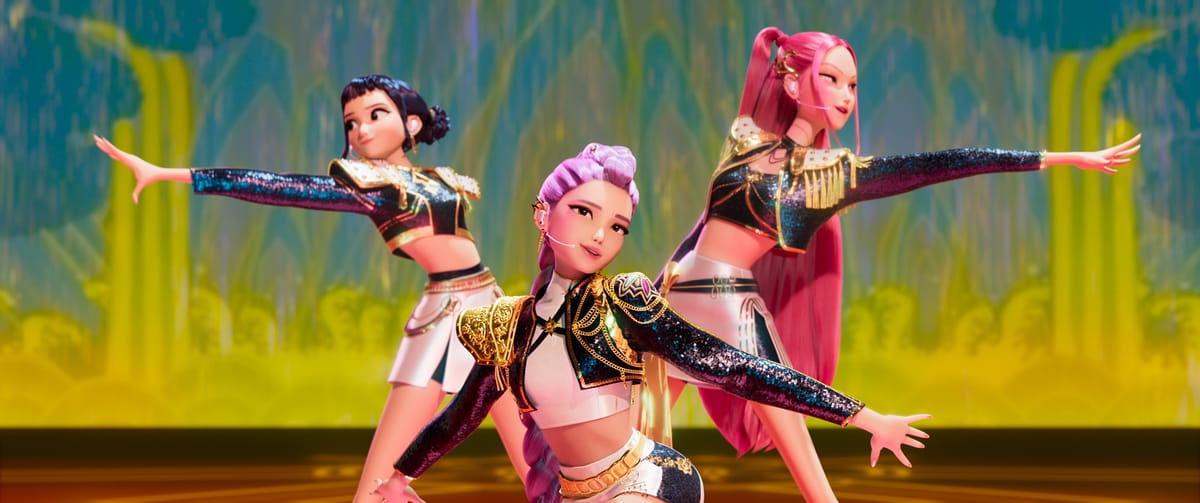
 Tamar Herman
 Tamar Herman
 Tamar Herman
 Tamar Herman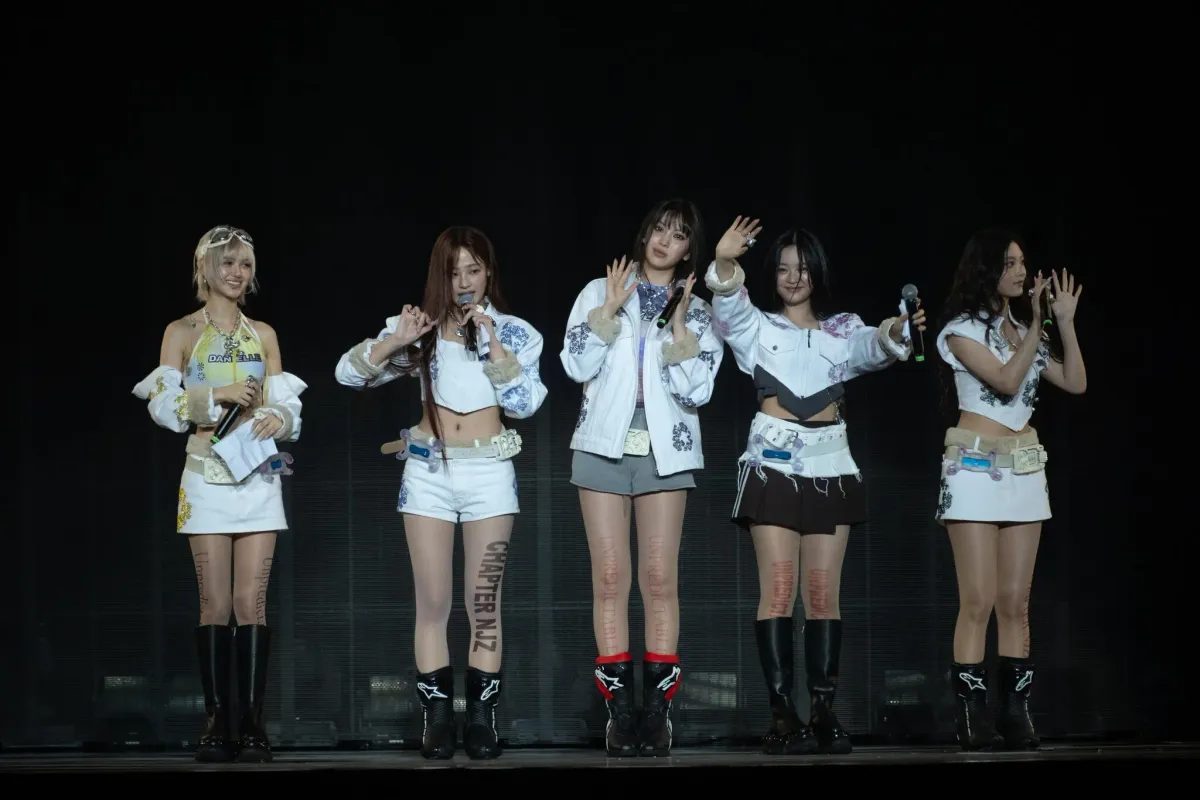
What I'm reading
NewJeans’ full-member comeback derails as Ador cuts ties with Danielle by Lee Jung-joo of the Korea Herald
Kakao Entertainment to launch pan-Asian K-pop artist chart with Tencent Music, LINE MUSIC by Byung-yeon Yoo of Korea Economic Daily - "The chart, scheduled to debut in the first half of next year, will consolidate K-pop usage data from three of Asia’s largest music markets—South Korea, China and Japan—into a single ranking. It will be available on Melon, Kakao Entertainment’s flagship music streaming platform."
Ex-NCT member Taeil sentenced to 3 years, 6 months for sexual assault by Sarah Chea for the Korea Joongang Daily
Do you have to be hot to be a journalist now? by Kat Tenbarge of Spitfire News - "So if influence today increasingly requires being on-camera, does that mean you have to be, well, hot to succeed? It’s something I’ve thought about a lot over the past couple of years, as the opportunities in traditional media shrink and all kinds of industries are pushing workers toward social media. And I don’t love the conclusions I’ve arrived at."
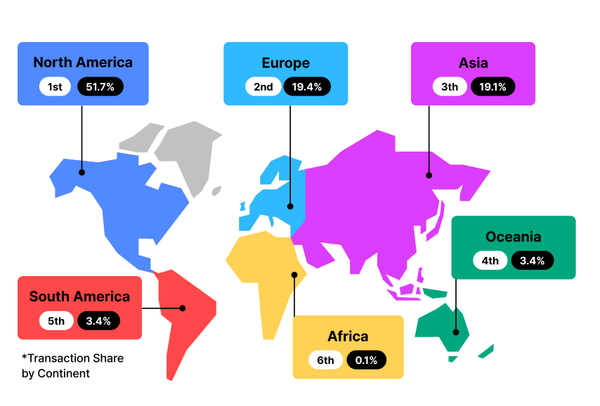
StubHub & viagogo’s 2025 Year in Live Experiences Report reveals that "K-pop jumped from virtually no stadium presence to a mainstream touring force, rising from 0.06% to 10% of the stadium landscape in just three years. Its touring footprint exploded too — jumping from 9 to 41 events and from 5 to 26 markets — marking one of the fastest nationwide scale-ups of any genre as it moved from small test shows to full U.S. stadium circuits.... 2026 Prediction: K-pop will expand beyond its current single-headliner model, with at least one additional group graduating to U.S. stadium scale, creating the genre’s first multi-headliner touring ecosystem and pushing its share of the stadium landscape even higher." I still am doubtful, but let's see how things go.
The Pudding explored the way musical DNA interplays between generations.
Lastly, I want to pay respects to music critic Kim Young Dae, who suddenly passed away recently. He has written multiple books on K-pop and different artists, and explored many facets of the music and industry. It's such a tragedy when any writer's pen comes to its final word. May his memory be a blessing.